
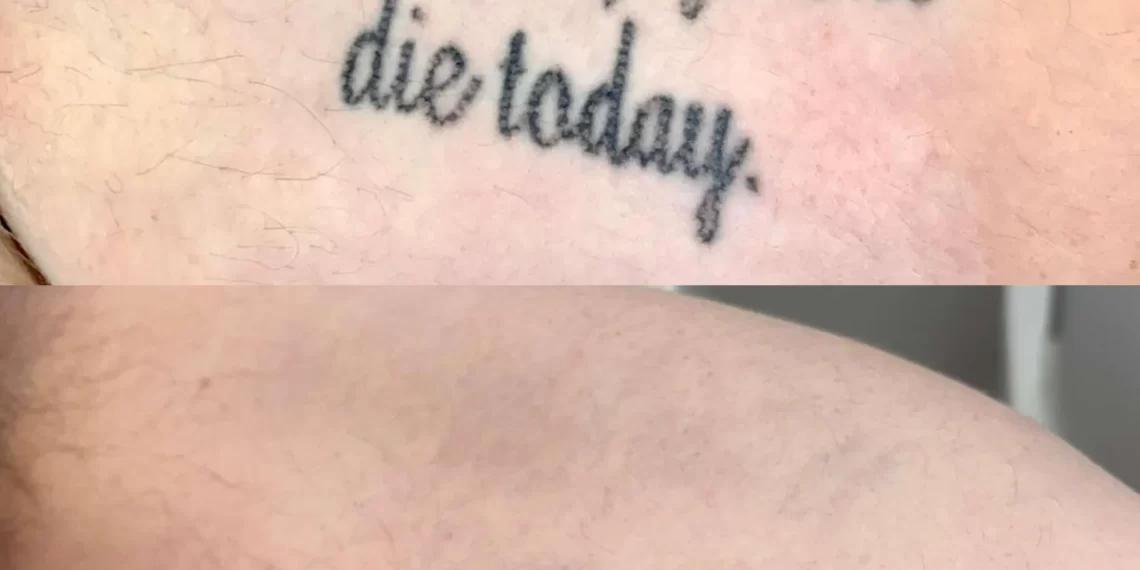
What is the cheapest way to remove a permanent tattoo?
Let’s face it: tattoos are a commitment, and sometimes our tastes (or decisions made at 19) don’t quite stand the test of time. If you’re looking into options and wondering what is the cheapest way to remove a permanent tattoo, you’re not alone. Every week in our Brisbane studio, we chat with clients who regret a tattoo — whether it’s an old eyebrow shape, faded body ink, or just something that no longer suits.
We’re not here to judge your past choices (we’ve all had our beauty regrets). We’re here to walk you through your options — safely, honestly, and with your skin’s health at the centre of it all. Whether you’re looking into eyebrow tattoo removal or larger body ink, the right method makes all the difference.
Contents
Why “Cheap” Isn’t Always Cheery
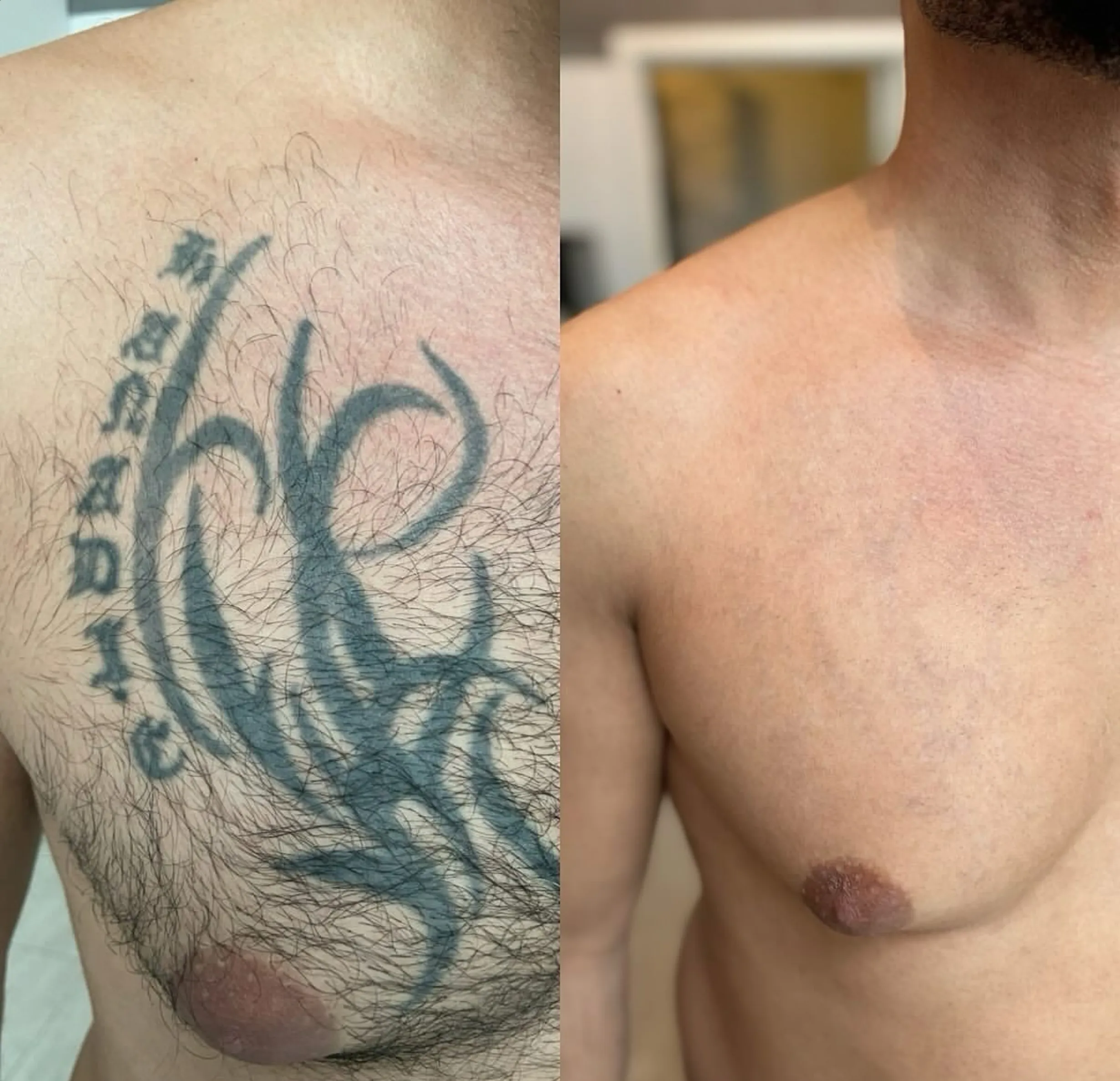
Choosing the cheapest method doesn’t just mean saving money upfront. It often means:
- More treatment sessions
- Higher risk of skin irritation or side effects
- Less effective breakdown of tattoo pigments
- Longer recovery time for your skin layers
We’ve seen clients who tried DIY tattoo removal creams or sketchy-at-best lightening methods, only to end up with chemical burns, skin discolouration, or ghosted blue tattoo ink that’s harder (and pricier) to treat long-term. Trust us: fixing cheap mistakes gets expensive.
That said, there are cost-conscious options worth exploring — especially if you understand how laser technology, your immune system, and skin type all play a role in results. That’s where smart choices in tattoo removal come in.
The Most Affordable (With Real Pros & Cons)
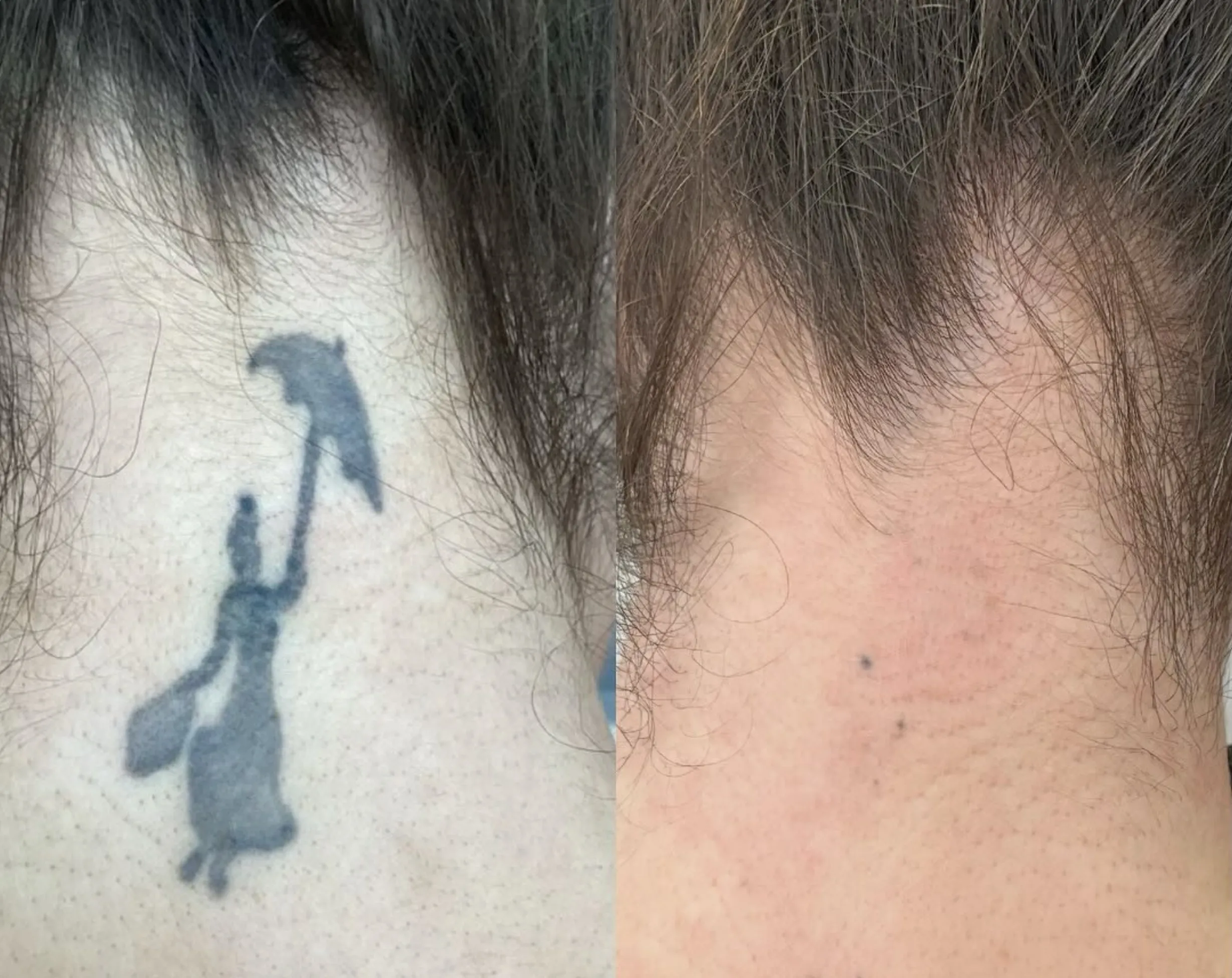
1. Saline Tattoo Removal
Saline removal uses a saline-based solution to lift pigment out of the skin. It’s most often used for cosmetic tattoos (like brows or lips) and is performed with a tattoo machine. If you’re looking for a non-laser approach, saline tattoo removal offers a skin-friendly option that works gradually and gently.
Pros:
- Gentle on skin (suitable for delicate areas like brows)
- Less risk of pigmentation issues on varied skin colour
- Can be more affordable per session than laser treatments
Cons:
- Works best on newer cosmetic tattoos, not dense body ink
- May require more sessions for deeper tattoo depth
- Slower results compared to modern laser systems
Typical price in Brisbane: $120–$200 per session
Real client story: One of our clients came in with saturated grey brows from an outdated technique. After three saline sessions spaced 8 weeks apart, the pigment had lightened enough for a beautiful fresh brow redo.
2. Laser Tattoo Removal
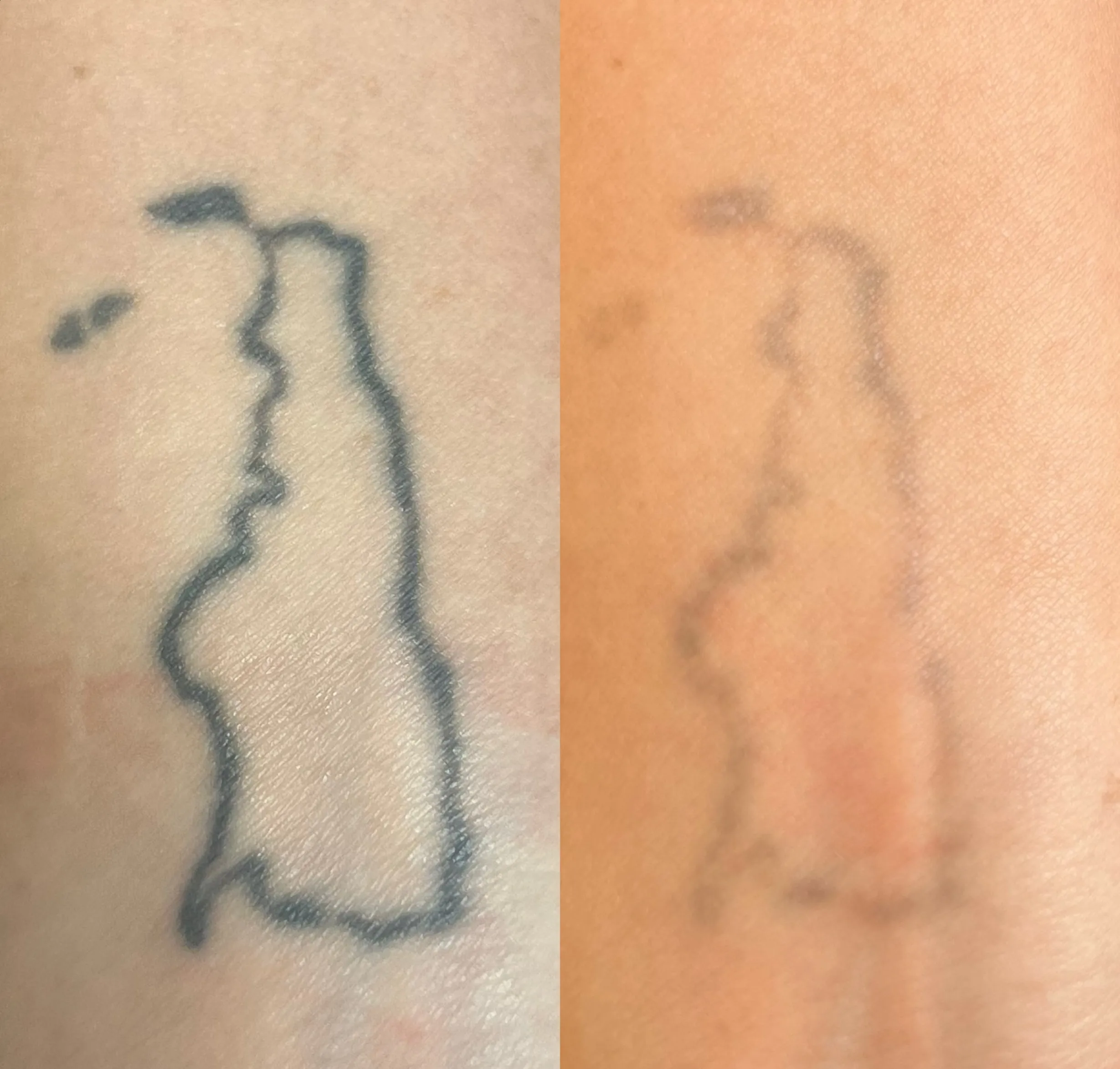
Laser removal is still the gold standard for breaking down permanent ink. Tattoo pigments are shattered into smaller ink particles using laser light, which are then flushed out by your lymphatic system through macrophagic processes. Whether it’s a faded tattoo from years ago or a newer cosmetic piece gone wrong, laser tattoo removal provides the most comprehensive fade.
Pros:
- Targets a wide range of ink colours and particle size
- Faster pigment clearance through the immune system
- Effective for most body tattoos and traumatic tattoos
Cons:
- Costlier upfront per session
- Varies by skin condition, tattoo location, and skin type
- May feel uncomfortable depending on your pain threshold
Laser systems used:
- Q-Switch Laser and Q-switched Nd: YAG laser
- PicoSure Laser and Picosecond lasers
- Carbon dioxide laser and ultrapulse carbon dioxide laser
Technical insight: Laser wavelength, laser fluence, and the laser beam’s energy must be calibrated based on the tattoo ink’s colour and pigmentation. Optical coherence tomography can help assess tattoo depth and skin layers.
Typical laser tattoo removal price: $200–$500 per session in Brisbane (depending on tattoo size, location, and ink colours). It’s worth asking your clinic whether their rates vary by machine type or treatment duration.
Tip: Ask your provider if they use Tattoo Removal Laser machines approved by medical professionals.
3. Tattoo Removal Creams (Not Recommended)
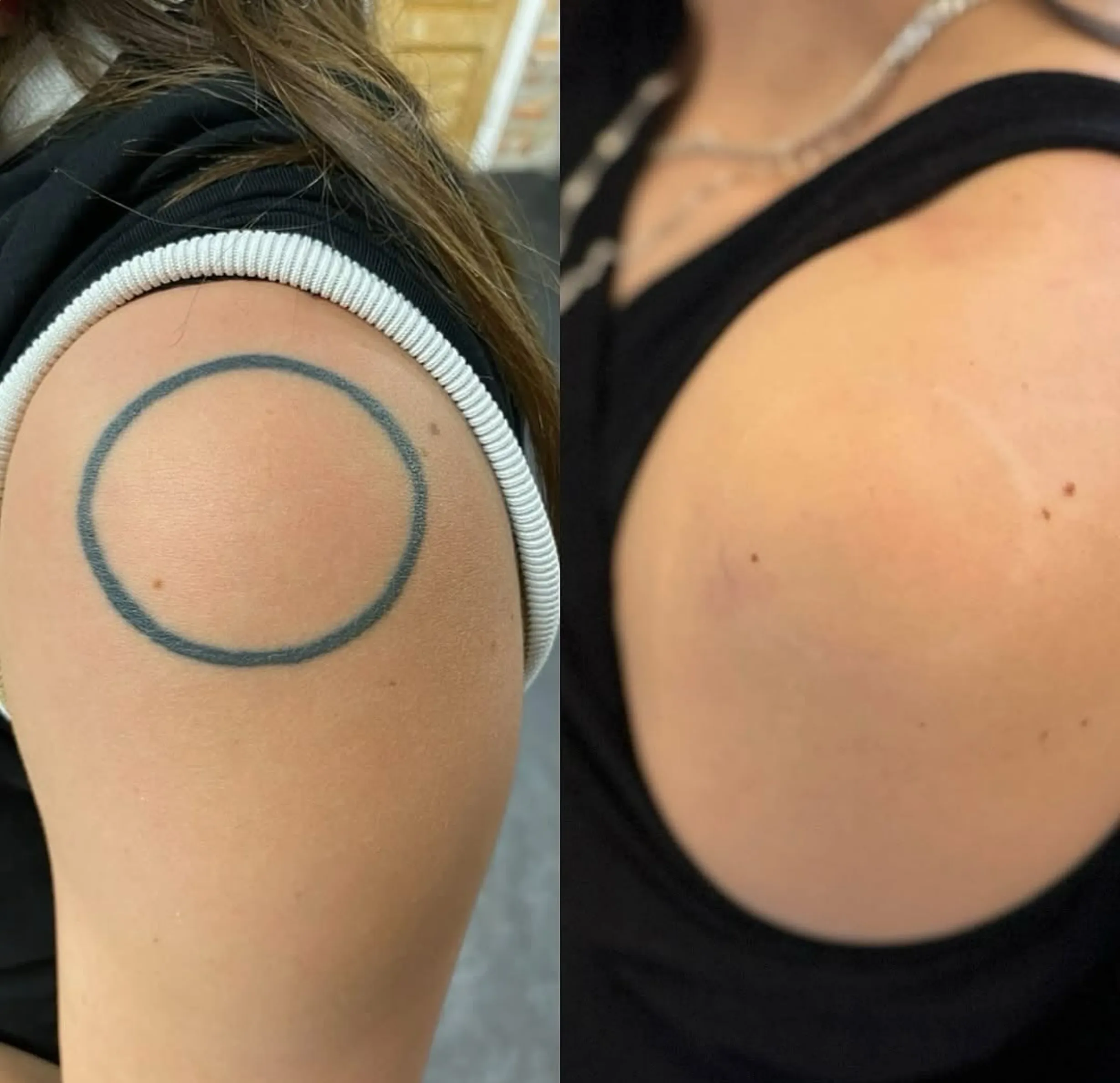
Tattoo removal creams are often promoted online as a budget-friendly fix. These usually contain acids like trichloroacetic acid, which can be harsh on the skin.
Pros:
- Readily available
- Lower cost upfront
Cons:
- No clinical evidence of effectiveness
- Can cause serious skin irritation, discolouration, or burns
- Not safe for any tattoo type or location
We’ve seen clients damage their skin barrier with creams from unregulated sellers. Always consult a licensed tattoo artist or skin specialist first.
4. DIY Acid-Based Fading (Just, No)
Some forums recommend at-home fading using acids or peels. Think lemon juice, glycolic acid, or trichloroacetic acid.
Cons:
- Risk of scarring and permanent skin damage
- Not controlled or monitored like clinical chemical peels
- No impact on deeper tattoo layers or ink particles
This might feel like a shortcut, but you’re playing roulette with your skin health. And it could end up costing more than professional tattoo removal in the long run.
Comparison Table
| Method | Avg. Cost/Session | Skin Risk | Suitable For | Notes |
|---|---|---|---|---|
| Saline Removal | $120–$200 | Low | Cosmetic tattoos, brows | Ideal for colour correction |
| Laser Removal | $200–$500 | Moderate | All tattoos, various depths | Best long-term removal of ink particles |
| Tattoo Removal Creams | $60–100 (total) | High | None (not advised) | May damage skin layers |
| DIY Acid Methods | ~$20 | Extreme | None | Unsafe; affects skin condition |
Beauty Trends 2025
With natural aesthetics trending, many are removing or correcting cosmetic tattoos. According to 2025 industry data, laser treatments using Q-switched lasers and Pico lasers have jumped 30% in demand.
People are seeking skin clarity, especially after over-saturated permanent ink or poor results from a past tattoo parlour experience.
Real Talk: When Cheap Becomes Costly
One Brisbane client attempted a DIY fade using trichloroacetic acid purchased online. Not only did they experience severe irritation, but their skin colour changed permanently. What could’ve been a straightforward laser removal ended up needing months of recovery.
Moral of the story? See a trained provider and skip risky shortcuts.
Final Thoughts
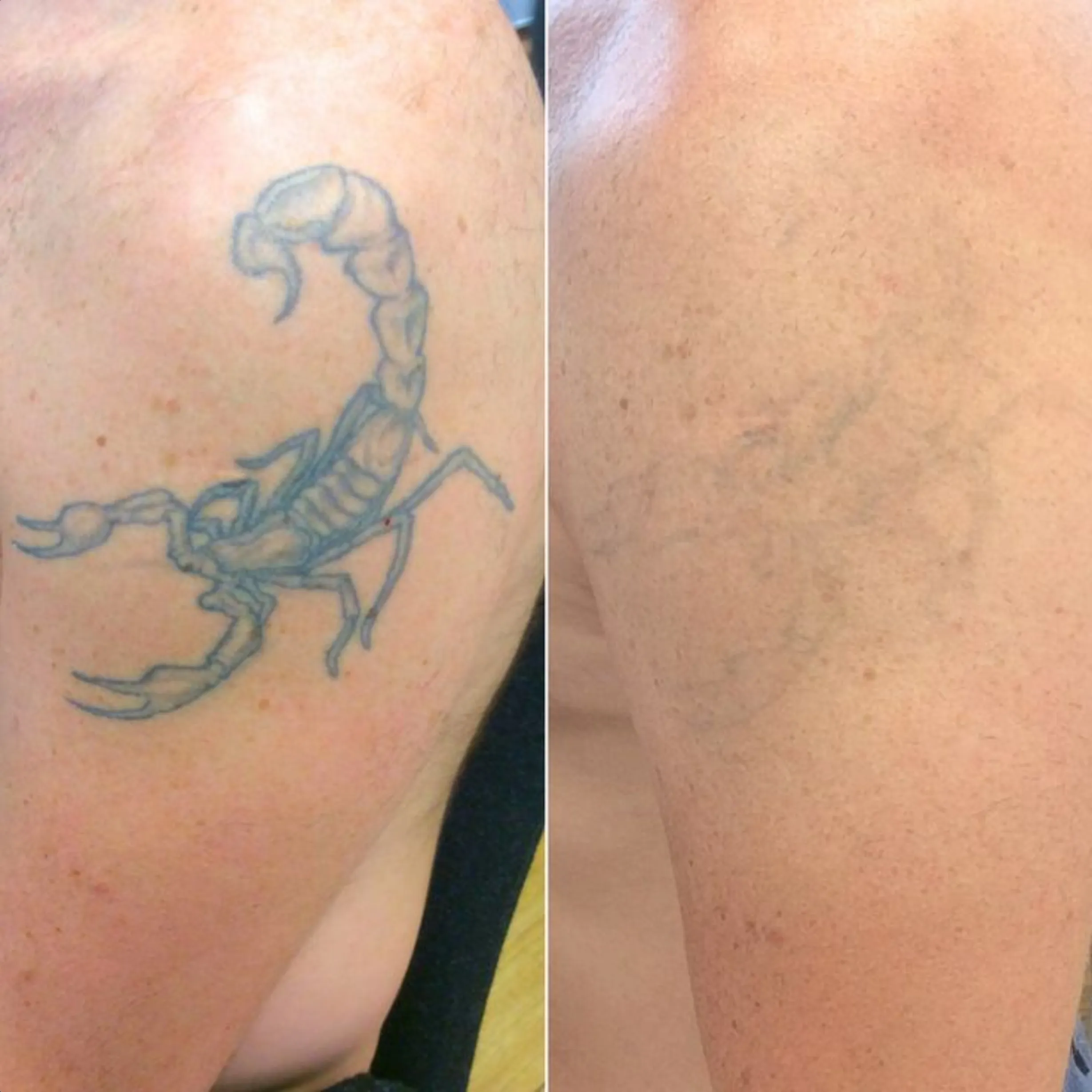
So, what is the cheapest way to remove a permanent tattoo? Technically, it might be a tube of cream from the internet — but realistically, that cheap fix can cost your skin more than it saves your wallet.
The most cost-effective and skin-safe option uses trusted Laser Technology, considers your immune system, skin type, and the depth of your tattoo pigments. Whether you’re targeting cosmetic tattoos, traumatic tattoo sites, or just a bit of youthful rebellion from your favourite tattoo parlour — let experience and light propagation do the work, not guesswork.
All treatments discussed are ones we’ve performed at Face Figurati Cosmetic Tattoo Studio in Brisbane, where skin health always comes first.
FAQ
What’s the safest tattoo removal method for sensitive skin?
Saline removal or Q-switched Nd: YAG laser at low fluence is ideal for delicate areas.
Do all lasers work on colour tattoos?
Not always. Picosecond lasers and PicoSure are more effective for stubborn ink colours.
Can laser tattoo removal affect my skin tone?
If not properly calibrated, yes. That’s why your skin type and laser wavelength choice matter.
Are medical professionals required for laser removal?
In Australia, only licensed practitioners or trained technicians should perform laser treatments.
Is surgical excision still used for tattoos?
Very rarely, and only in small tattoos or when other methods fail. It leaves a scar.